Chicago , il


If you’ve ever tried to book a limo “by the hour” in Chicago, you’ve probably run into the same wall most people do: every company quotes a different rate, nobody explains the minimum hour rules the same way, and it’s genuinely hard to tell what you’ll actually pay until the invoice lands in your inbox.
Hourly limo rates in Chicago typically start around $80/hour for a standard sedan and climb from there depending on vehicle class, day of the week, and season. A Sprinter van or SUV usually runs $120–$180/hour, a stretch limo $150–$250/hour, and a Rolls-Royce or other luxury specialty vehicle $250–$400+/hour. Most companies also enforce a minimum booking window — often 3 hours on weekdays and up to 5–6 hours on weekends or during peak event season.
That’s the short version. Below is the full breakdown — real rate ranges by vehicle, how minimums actually work, when hourly billing saves you money versus a flat-rate transfer, what’s baked into the hourly price, and the mistakes that quietly inflate a final bill.
Chicago’s limo market is unusually fragmented. Unlike a flat-rate airport run — where the destination and distance set the price — hourly rentals are priced almost entirely on vehicle class, chauffeur time, and demand for that specific date. That means two companies quoting the same SUV for the same Saturday night can land $60–$80 apart on the final number, simply because one is pricing off a slower Tuesday and the other is pricing off peak wedding-season demand. Understanding why the number looks the way it does is the difference between comparing quotes intelligently and just picking whichever number looks smallest on a screen.
This guide walks through every variable that actually moves an hourly quote in Chicago: the vehicle table, the minimum-hour rules that catch people off guard, the flat-rate-vs-hourly decision, what’s quietly bundled into the rate versus billed separately, real-world use case math, a simple formula for estimating your total before you call anyone, and the handful of booking mistakes that turn a reasonable quote into an inflated final invoice.
Hourly Rates by Vehicle Type in Chicago
Hourly limo pricing in Chicago is driven mostly by vehicle capacity and vehicle class — not distance, since you’re paying for the chauffeur’s time, not the miles. Here’s how it typically breaks down across the market:
| Vehicle Type | Passenger Capacity | Typical Hourly Rate | Common Minimum |
|---|---|---|---|
| Sedan (Lincoln/Cadillac-class) | 1–3 | $80–$100/hr | 2–3 hrs |
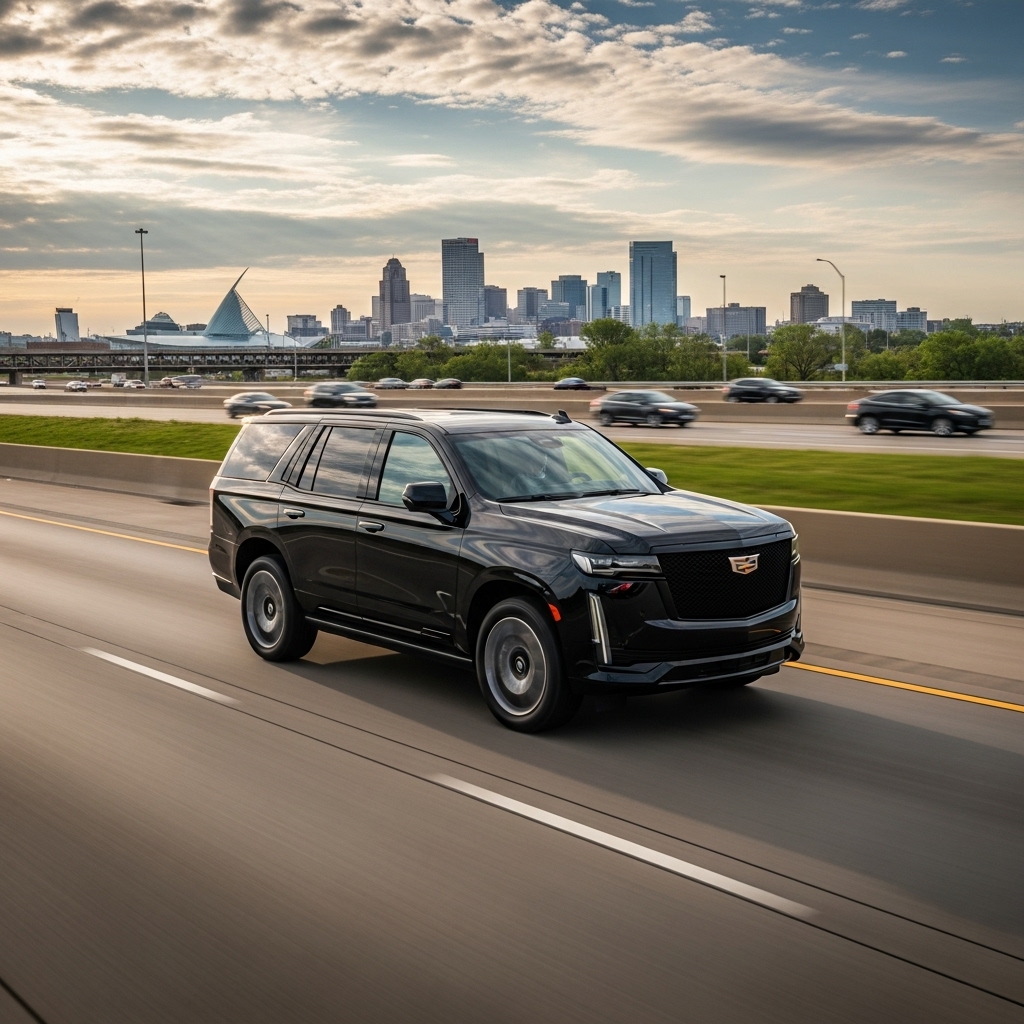
| SUV (Suburban/Escalade-class) | 4–6 | $120–$150/hr | 3 hrs |
| Sprinter Van | 8–14 | $130–$180/hr | 3–4 hrs |
| Stretch Limo | 8–10 | $150–$250/hr | 3–4 hrs |
| Stretch SUV / Party Bus | 14–20 | $180–$300/hr | 4–5 hrs |
| Rolls-Royce / Luxury Specialty | 2–3 | $250–$400+/hr | 3–4 hrs |
For an up-to-date, itemized breakdown of current pricing across the full fleet, our Chicago limo pricing page is the most reliable source — hourly rates are seasonal and can shift during high-demand stretches like wedding season (May–October) and major event weekends.
A few things that move the rate within each vehicle category:
- Time of booking. Weekday daytime hours (roughly 9 AM–4 PM) are usually the cheapest window. Friday and Saturday evenings command a premium almost everywhere in the city.
- Season. Prom season (April–May), wedding season (May–October), and major event weekends (Lollapalooza, NASCAR Chicago Street Race, Cubs/Sox playoff runs) push hourly rates up 15–30% due to demand.
- Garage/vehicle age. Newer fleet vehicles and higher-end interior packages (mood lighting, premium sound, stocked bar service) sit at the top of each range.
- Pickup location. Downtown and North Side pickups are generally priced at standard rates; far South Side, far West Side, and deep suburban pickups sometimes carry a small positioning fee since the vehicle has to travel further before the meter effectively “starts” in practice.
- Group size relative to vehicle capacity. A vehicle running near its max capacity for the full booking window is a straightforward hourly rate. A vehicle booked well under capacity (say, 3 people in a 10-passenger stretch) is still billed the same hourly rate — so right-sizing matters as much for cost as for comfort.
Related Guides: Chicago Marathon 2026 Transportation Guide: Road Closures & Best Routes
A closer look at each vehicle class
Sedans: are the default choice for solo travelers, couples, and small business trips where the vehicle needs to blend in rather than stand out. Because they’re the most common vehicle in any fleet, they also tend to have the most flexible minimum-hour policies — some companies will do a 2-hour weekday minimum on a sedan when a comparable SUV or stretch limo requires 3.
SUVs: sit in the middle of the market and are the most frequently booked vehicle for hourly work in Chicago, largely because they handle both small groups comfortably and modest luggage loads without upgrading to a van. Expect the widest rate spread within this category — a base Suburban-class SUV and a fully loaded Escalade ESV can differ by $30–$40/hour even though both fall under “SUV.”
Sprinter vans: are the sweet spot for group hourly bookings — wine tours, multi-stop city tours, and larger family or corporate groups. Per-person, they’re often the cheapest hourly option once you cross 6–8 passengers, since the hourly rate doesn’t scale linearly with capacity the way smaller vehicles do.
Stretch limos: remain the classic choice for prom, milestone birthdays, and anniversary bookings where the vehicle itself is part of the experience, not just transportation. Rates vary more here than in any other category depending on the age and condition of the specific vehicle, since stretch limo interiors (lighting packages, bar setups, sound systems) differ widely between fleets.
Stretch SUVs and party buses: are priced for larger groups and are almost always subject to the highest minimums on this list, since they’re the vehicles most in demand on the exact nights (Friday/Saturday, event weekends) when minimums are enforced most strictly.
Rolls-Royce and other luxury specialty vehicles: are priced less like transportation and more like an experience rental — proposal moments, anniversary surprises, VIP arrivals. Availability is typically limited to one or two units per fleet, so these book out fastest during wedding season and should be reserved well in advance.

Minimum Hour Requirements — Why They Exist and How They Work
Nearly every limo company in Chicago enforces a minimum number of billable hours, and it surprises a lot of first-time renters. Here’s the logic: a chauffeur and vehicle being dispatched for a 1-hour job still ties up that vehicle for prep, positioning, and cooldown time — so companies protect against unprofitable short bookings with a floor.
Typical minimums in Chicago:
- Weekday (Mon–Thu): 2–3 hours
- Friday: 3–4 hours
- Saturday: 4–5 hours (sometimes higher during wedding/event season)
- Sunday: 3 hours
- Holidays & major events (New Year’s Eve, St. Patrick’s Day, prom weekends): often 5–6 hour minimums, sometimes with a separate holiday rate card entirely
If your plan genuinely only needs 90 minutes on a Saturday night, you’ll still be billed for the full minimum block — so it’s worth stacking additional stops or destinations into that window rather than treating the extra hours as wasted.
Why minimums are higher on weekends and during event season
The logic scales with opportunity cost. A vehicle and chauffeur dispatched for a 2-hour Saturday-night job during peak wedding season could otherwise be booked for a 5-hour block at full weekend rates — so companies raise the minimum specifically on high-demand nights to make sure short bookings don’t crowd out more profitable ones. This is standard practice across nearly every operator in the city, not something specific to any one company, so shopping around for a lower minimum on a Saturday in June is usually a losing battle.
Can minimums ever be negotiated?
Occasionally, yes — mostly during off-peak windows (weekday afternoons, January–March, mid-week in general) when fleet utilization is naturally lower and companies have more flexibility to fill a gap. It’s worth asking directly, but don’t expect movement on a Friday or Saturday night during May–October.
How the minimum interacts with overtime
One detail that trips people up: the minimum and overtime are two separate mechanisms. The minimum sets your floor — you can’t book less than it, even if you use less. Overtime is what happens if you go over whatever you actually booked, minimum or not. Booking a 3-hour minimum and running 3 hours and 20 minutes still triggers overtime billing on that extra 20 minutes, even though you cleared the minimum requirement.
Related Guides: McCormick Place Convention Transportation Guide
When Hourly Makes More Sense Than Flat-Rate Airport Transfer
This is the question we get asked constantly: should I book by the hour, or just get a flat-rate transfer?
Flat-rate makes sense when:
- You have a single origin and a single destination (e.g., O’Hare to downtown, or home to Midway)
- There’s no waiting, no stops, no “let’s see how the night goes” flexibility needed
- You want price certainty locked in before the trip
Hourly makes sense when:
- You have multiple stops (venue-hopping, a bar crawl, a multi-location wedding day)
- You need the vehicle to wait for you somewhere (a dinner, a meeting, a show) and then continue on
- Your itinerary is loose or likely to shift in real time
- You’re touring the city and want flexibility to linger somewhere longer than planned
A rough rule of thumb: once your trip involves more than one stop and any meaningful wait time, hourly billing almost always works out cheaper — and less stressful — than trying to string together multiple flat-rate transfers. For a single point-to-point ride with no stops, flat-rate is usually the better deal. If you’re weighing this specifically for the airport, our general Chicago limo pricing breakdown covers flat-rate airport transfer costs side-by-side.
A worked comparison
Say you’re flying into O’Hare, checking into a downtown hotel, and then heading to a dinner reservation three hours later before returning to the hotel for the night.
- Flat-rate approach: One O’Hare-to-downtown transfer, booked separately later for the dinner run (either a second flat-rate booking or a rideshare). Total cost is the sum of two or three separate bookings, each carrying its own base fare, and you’re at the mercy of driver availability for each leg individually.
- Hourly approach: Book a 4–5 hour block starting at the airport. The vehicle brings you downtown, waits (or comes back at a scheduled time) for the dinner run, and handles the return — one continuous booking, one chauffeur, one rate.
In this scenario, hourly billing usually wins on both cost and convenience, because you’re not paying separate base fares for each leg and you’re not coordinating multiple pickups.
When flat-rate still wins
If your entire trip is genuinely a single point A to point B — airport to hotel, hotel to a wedding venue, nothing else — a flat-rate transfer is priced for exactly that scenario and will almost always beat hourly billing, since you’re not paying for any idle time at all.
What’s Actually Included in the Hourly Rate
Hourly pricing can look deceptively simple until the final invoice shows extra line items. Here’s what’s typically included versus added on top:
Usually included in the base hourly rate:
- Chauffeur time for the full booked window
- Fuel for standard in-city driving
- Standard wait time while the meter is running (i.e., the vehicle is already on the clock, so waiting doesn’t cost extra — it’s just part of the hours you booked)
- Basic amenities (bottled water, phone chargers, climate control)
Usually added separately:
- Gratuity — typically 18–20%, sometimes built into the quote, sometimes added at booking. Always confirm which.
- Fuel surcharge — some companies add this for trips outside city limits or extended suburban runs
- Overtime — if you go past your booked block, you’re billed in 15- or 30-minute increments at the same hourly rate (or slightly higher)
- Cleaning fees — for spills, excessive mess, or violations of no-smoking policies
- Stop fees — a small number of companies charge per additional stop beyond a set number; most Chicago operators don’t, but it’s worth asking
Before booking, ask directly: “Is gratuity included in this quote, and what’s the overtime rate if we run long?” That single question eliminates most billing surprises.
Reading a quote line by line
A transparent hourly quote should break down into clearly labeled components: base rate × hours, gratuity, and any applicable surcharges — each as its own line, not folded into a single lump number. If a quote arrives as one flat total with no breakdown, it’s worth asking the company to itemize it before you book. This isn’t about distrust — it’s about making sure you and the company have the same understanding of what’s covered if the night runs long or plans shift.
Cancellation and deposit policies
Related to “what’s included” is what happens if plans change. Most Chicago limo companies require a deposit (often 20–50% of the total) to hold a booking, especially during wedding season, with the balance due on or before the day of service. Cancellation windows vary — some allow a full refund up to 48–72 hours out, others tighten that window during peak season when the vehicle is harder to rebook on short notice. Ask about this at the same time you confirm gratuity and overtime terms, so there are no surprises on either end.
Sample Use Cases: What Hourly Booking Actually Looks Like
Wine Tour (Suburban wineries / North Shore day trip):
A typical wine tour runs 6–8 hours in an SUV or Sprinter van, since it involves multiple stops and built-in wait time at each vineyard. At $140/hr for a Sprinter, an 7-hour day lands around $980 plus gratuity — split across a group, that’s often cheaper per person than driving separately and hiring a designated driver.
City Tour (Downtown Chicago sightseeing):
A 3–4 hour city tour in a sedan or SUV covering the Loop, Magnificent Mile, Millennium Park, and the lakefront typically runs $350–$600 depending on vehicle class — a comfortable, flexible way to see the city without parking headaches.
Multi-Stop Business Day:
Executives running client meetings across the Loop and the suburbs often book a sedan for a 4–6 hour block, using wait time between meetings productively instead of re-summoning rideshares. At $90/hr, a 5-hour business day runs roughly $450 plus gratuity — with zero parking or navigation overhead.
Concert Night / Event Night:
Groups heading to United Center, Wrigley Field, or a downtown venue often book a 4-hour minimum stretch limo or party bus block — one leg there, wait time at the venue is skipped (guests handle their own night), and one leg home, or continuing to an after-party. This is one of the more popular use cases we cover in more detail on our wedding transportation guide and our bachelorette party limo guide, since both events often use the same hourly-block structure.
Wedding Day Transportation:
Wedding days are almost always hourly, not flat-rate, because the itinerary typically spans a ceremony location, photo stops, a reception venue, and often a send-off later in the night — with the vehicle waiting through the ceremony and photos before the reception leg.
A typical wedding-day hourly block runs 5–8 hours depending on the schedule, and this is one of the few use cases where booking more buffer time than you think you need is genuinely worth it, since wedding timelines routinely run behind. Our full Chicago wedding limo guide walks through vehicle selection, timeline planning, and typical hourly blocks in much more depth.
Bachelorette Party Night:
Bachelorette parties are a near-perfect example of when hourly makes more sense than flat-rate — multiple stops (dinner, a rooftop bar, a second bar, a club), unpredictable timing between stops, and a group that wants the flexibility to linger somewhere longer than planned without penalty. A 4–6 hour party bus or stretch SUV block is the most common booking pattern here. The bachelorette party limo guide covers vehicle sizing and typical Chicago bar-hop routes in more detail.
Related Guides: How Much Does a Wedding Limo Cost in Chicago? (2026 Pricing & Planning Guide)
How to Estimate Your Total Cost Before Booking
A simple formula gets you most of the way there:
(Hourly rate × number of hours) + gratuity (18–20%) + any surcharges = estimated total
Example: SUV at $140/hr for a 4-hour minimum
- Base: $140 × 4 = $560
- Gratuity (20%): $112
- Estimated total: ~$672
A few tips to estimate more accurately:
- Round up your actual time need, then check it against the minimum. If you need 3.5 hours and the weekend minimum is 4, you’re paying for 4 regardless — plan the extra 30 minutes into your itinerary.
- Ask for a written quote that itemizes gratuity separately. Verbal hourly quotes sometimes don’t clarify whether the tip is baked in.
- Build in buffer time for events with unpredictable end times — weddings, concerts, and sporting events routinely run long, and overtime billed in 15-minute increments adds up fast if you cut it too close.
- For our full fleet and current published rates, the hourly rental service page has the most current numbers by vehicle and season.
A second example — larger group, longer day
Example: Sprinter van at $160/hr for a 7-hour wine tour, group of 10
- Base: $160 × 7 = $1,120
- Gratuity (18%): $201.60
- Estimated total: ~$1,321.60
- Per person (10 guests): ~$132
Compared to renting individual vehicles, hiring rideshares for each leg, or having a designated driver skip the tour entirely, the per-person hourly cost often comes out favorably once a group crosses 6–8 people — one more reason hourly Sprinter and stretch SUV bookings are so common for group outings in Chicago.
Questions worth asking before you commit
- Is the quoted rate per hour, or a flat package price that happens to correspond to a certain number of hours?
- What’s the exact minimum for my specific date, not a general minimum quoted off-season?
- Is gratuity included, and at what percentage?
- What’s the overtime rate, and is it billed in 15- or 30-minute increments?
- Is there a deposit, and what’s the cancellation/refund policy?
- Does the quote include fuel, or is there a surcharge for suburban/out-of-city stops?
Common Hourly Booking Mistakes
1. Underestimating how many hours you actually need. The most common mistake by far. People book the minimum, then realize halfway through the night they need another hour — at which point they’re paying overtime rates and sometimes competing for driver availability if the vehicle has another job booked after theirs.
2. Not accounting for traffic and load-in/load-out time. Chicago rush hour (roughly 7–9 AM and 4–6:30 PM) and downtown event traffic can eat 20–30 minutes that people forget to plan for. A “quick 15-minute drive” downtown during rush hour is rarely quick.
3. Assuming wait time is free everywhere. Wait time is free within your booked hourly window — but if the vehicle is booked flat-rate for a single transfer and you ask the driver to wait unplanned, that often converts to hourly billing on the spot at a less favorable rate.
4. Not confirming the minimum hour policy for your specific day. Minimums shift for weekends, holidays, and event season. Confirm the exact minimum for your date — not a general number quoted over the phone weeks earlier.
5. Skipping the gratuity question. Assuming gratuity is included when it isn’t (or vice versa) is the single most common source of “surprise” charges on a final bill.
6. Booking a vehicle sized for the wrong group. An 8-hour stretch limo for 3 people is an expensive way to travel. Right-sizing the vehicle to the group often unlocks a meaningfully cheaper hourly rate.
7. Booking too close to the date during peak season. Weekend and event-season hourly bookings — especially specialty vehicles like a Rolls-Royce or larger party buses — can sell out weeks in advance during May–October. Booking last-minute during peak season sometimes means paying a premium simply because the cheaper options are already gone.
8. Not clarifying the pickup/drop-off location in advance. Positioning fees or slightly adjusted rates for far-out pickups are easy to miss if the location isn’t confirmed at the time of quoting. Always confirm the exact address, not just the neighborhood, before locking in a rate.
9. Forgetting to ask about the cancellation policy. Plans change, especially for events with a lot of moving parts (weddings, large group outings). Not knowing the deposit and cancellation terms in advance is one of the more common regrets people mention after the fact.
How the Hourly Booking Process Actually Works
For anyone booking a Chicago hourly limo for the first time, the process generally follows the same steps regardless of which company you use:
1. Share your itinerary, not just a headcount: The more specific you can be — pickup address, approximate number of stops, expected wait time at each, and your desired end time — the more accurate the quote you’ll get. A vague “we need a limo for a few hours” request forces the company to guess at a minimum, which usually defaults to the higher end.
2. Get the quote itemized: As covered above, ask for base rate, hours, gratuity, and any surcharges broken out separately rather than a single bundled number.
3. Confirm the vehicle, not just the class: “SUV” can mean several different models with different capacities and amenity packages. If specific features matter to you — extra legroom, a particular sound system, a stocked bar — confirm the exact vehicle, not just the category.
4. Lock in the deposit and cancellation terms: Get this in writing (email or contract), especially for weekend or peak-season bookings.
5. Confirm pickup details 24–48 hours out: Most companies will reach out to reconfirm timing and location shortly before the booking, especially for multi-stop hourly work where the schedule matters.
Booking hourly transportation isn’t fundamentally more complicated than booking a flat-rate transfer — it just requires a bit more upfront detail so the quote reflects what you actually need instead of a generic estimate.
Chicago-Specific Factors That Affect Hourly Bookings
Traffic patterns: Chicago’s expressway system (I-90/94, I-290, Lake Shore Drive) is notoriously congested during rush hour and around major events at United Center, Soldier Field, or Wrigley Field. If your hourly booking includes travel during these windows, build in extra time — a chauffeur can’t out-drive gridlock, and eating into your booked hours because of traffic is one of the more avoidable ways to trigger overtime.
Weather: Chicago winters bring snow and ice that can slow travel significantly between November and March. Companies generally don’t adjust hourly minimums for weather, but it’s worth padding your itinerary with extra time during winter bookings, particularly for airport runs or long cross-city routes.
Downtown parking and loading zone restrictions: Certain downtown blocks, especially around Michigan Avenue and the Loop during business hours, have restricted loading windows. An experienced Chicago chauffeur will know how to navigate this, but it’s another reason pickup/drop-off timing sometimes needs a few extra minutes of buffer downtown compared to a suburban pickup.
Neighborhood-specific demand: Areas like the West Loop, River North, and the Gold Coast see heavier weekend evening demand for hourly bookings (nightlife, private events), which is part of why weekend rates and minimums in the city core tend to sit at the higher end of the ranges listed above compared to suburban bookings on the same night.
Event calendar spikes: Beyond wedding season, Chicago’s event calendar — Lollapalooza (August), the NASCAR Chicago Street Race (July), Taste of Chicago, and major sports playoff runs — creates short, sharp demand spikes where both rates and minimums move noticeably higher for that specific week. If your dates overlap with a major citywide event, book earlier than you otherwise would.
Related Guides: DuPage Airport (DPA) Travel Guide: Private Jet Arrivals & Car Service
FAQ: Chicago Hourly Limo Rentals
1. What is the average hourly rate for a limo in Chicago?
Sedans typically start around $80–$100/hour, SUVs and Sprinter vans $120–$180/hour, stretch limos $150–$250/hour, and luxury specialty vehicles like a Rolls-Royce $250–$400+/hour, depending on season and day of the week.
2. Is there a minimum number of hours I have to book?
Yes. Most Chicago limo companies require a minimum of 2–3 hours on weekdays and 4–5 hours on weekends, with higher minimums during holidays and peak event season.
3. Does the hourly rate include gratuity?
It depends on the company — some build in an 18–20% gratuity, others add it separately at booking or on the final invoice. Always confirm this before booking to avoid surprises.
4. Is hourly billing cheaper than a flat-rate airport transfer?
For a single point-to-point trip with no stops, flat-rate is usually cheaper. Hourly becomes the better value once you have multiple stops or need the vehicle to wait for you.
5. What happens if I go over my booked hours?
You’ll be billed overtime, usually in 15- or 30-minute increments at the same or a slightly higher hourly rate. It’s worth building in buffer time if your event has an unpredictable end time.
6. Does wait time cost extra during an hourly booking?
No — wait time is part of your booked hourly window. It only becomes an extra charge if you’re on a flat-rate transfer and ask the driver to wait beyond what was arranged.
7. Are there additional fees beyond the hourly rate?
Possible extras include gratuity (if not already included), fuel surcharges for trips outside the city, cleaning fees, and occasionally stop fees — though most Chicago operators don’t charge per-stop.
8. Do rates change during wedding season or major events?
Yes. Rates and minimums both tend to increase from May through October (wedding season) and during major event weekends like Lollapalooza or playoff runs, due to higher demand.
9. What vehicle should I book for an hourly city tour?
For 1–3 people, a sedan is typically enough. For groups of 4–6, an SUV offers more comfort. Larger groups touring together often do best in a Sprinter van, which balances capacity with a lower per-person hourly cost.
10. How far in advance should I book an hourly limo in Chicago?
For weekday or off-peak bookings, a few days’ notice is usually fine. For weekend, wedding-season, or major-event bookings, 2–4 weeks in advance is safer, and specialty vehicles like a Rolls-Royce should be booked even earlier since fleets often have only one or two units.
11. Can I extend my booking on the spot if I’m having a great time?
Often, yes — if the chauffeur and vehicle don’t have another booking immediately after yours. It’s billed as overtime at your existing hourly rate (or slightly higher), but availability isn’t guaranteed, especially on busy weekend nights, so it’s safer to book slightly more time up front than to count on extending later.
12. Do I need to tip the chauffeur separately if gratuity is already included?
No — if gratuity is included in your quote, no additional tip is required, though it’s always appreciated for exceptional service. If gratuity isn’t included, the standard expectation is 18–20% of the total fare.
Explore More