Chicago , il

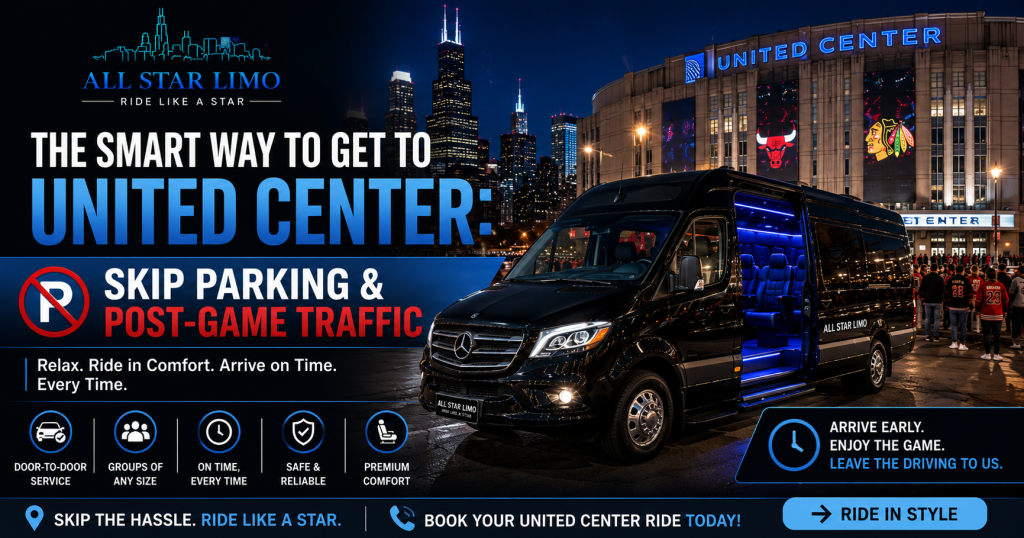
A private limo or SUV ride to United Center typically runs $120–$250 one-way from downtown Chicago, and $180–$400 one-way from the suburbs, depending on vehicle size and event timing. Round-trip and hourly “wait-and-return” packages are usually the better value on game and concert nights, since your driver can idle nearby and have you back on the road within minutes of the final buzzer or last encore.
United Center nights are electric — until you’re stuck circling a parking garage on Damen Avenue, or sitting in gridlock on the Ike thirty minutes after the horn sounds. Whether you’re headed to a Bulls game, a Blackhawks match, or a sold-out concert, how you get there and back matters almost as much as the seats you booked. This guide breaks down why United Center transportation is uniquely stressful, where the smartest drop-off and pickup points are, how to time your ride around Chicago’s traffic patterns, and what group options make sense for a full crew of fans.
Why United Center Parking Is Rough on Game/Concert Nights
United Center sits on the Near West Side, a part of Chicago that wasn’t really built for the volume of cars that show up on event nights. A handful of factors combine to make parking here one of the more frustrating experiences in Chicago sports and entertainment:
Limited on-site capacity:
The arena’s own lots fill fast, often within an hour of gates opening for a marquee Bulls or Blackhawks game. Once those lots are full, everyone gets funneled into a patchwork of independent lots along Wood Street, Damen Avenue, and Warren Boulevard — many of which are gravel, poorly lit, and cash-only.
Surge pricing on lots:
Unlike downtown parking garages with posted daily rates, many of the lots surrounding United Center adjust pricing based on demand. A $20 lot on a Tuesday night game can jump to $60 or more for a nationally televised matchup or a high-demand concert.
Single-exit bottlenecks:
United Center is boxed in by the Eisenhower Expressway to the south and a limited number of surface streets feeding traffic in and out. When 20,000+ people leave at once, every one of those streets backs up simultaneously — there’s no quick alternate route that avoids the crush entirely.
Neighborhood street conditions:
The area immediately around the arena has narrow streets, frequent construction, and event-specific police barricades that shift from week to week. Drivers unfamiliar with the current traffic pattern often lose 15–20 minutes just figuring out where they’re allowed to turn.
Weather and season swings:
Blackhawks season runs through Chicago’s coldest months, which means walking several blocks from an overflow lot in January wind chill is its own kind of unpleasant — something a curbside drop-off solves entirely.
None of this is a reason to skip the game. It’s simply the reason so many regular attendees have shifted to a private car service instead of driving themselves — the value isn’t just convenience, it’s predictability on a night when almost nothing else about the traffic situation is predictable.
Best Drop-Off & Pickup Points Near the Arena
A professional driver’s biggest advantage over a rideshare app isn’t the vehicle — it’s local knowledge of exactly where to stop. Rideshare drivers unfamiliar with United Center’s flow often get stuck idling in the same lanes as everyone else. Below are the general zones experienced Chicago limo drivers use, adjusted in real time based on that night’s police barricades and gate assignments.
Madison Street side (main entrance approach):For most Bulls and Blackhawks games, this is the primary arrival corridor. It’s typically the most convenient for guests heading to lower-bowl or club-level seating, but it’s also the busiest, so drivers aim to drop off before the pre-game rush peaks.
Wood Street and the west gates: A useful alternative approach when Madison Street backs up, particularly for early-arriving groups who want a shorter walk to the west side entrances.
United Center Drive loop: The arena’s internal loop road is where most professional car services queue for both drop-off and pickup, since it keeps vehicles off the congested public streets during the highest-traffic windows.
Off-site pickup points for post-event pickup: On nights with a packed exit, many drivers will pre-arrange a pickup a block or two away from the busiest loop — somewhere like a quieter stretch of Warren Boulevard — so your ride is genuinely waiting rather than stuck in the same queue as every other vehicle trying to reach the arena doors.
The exact best spot changes slightly game to game based on which gates are open and where event staff are directing traffic that night, which is exactly why a local driver who does this run regularly is worth more than a GPS app on a United Center night.
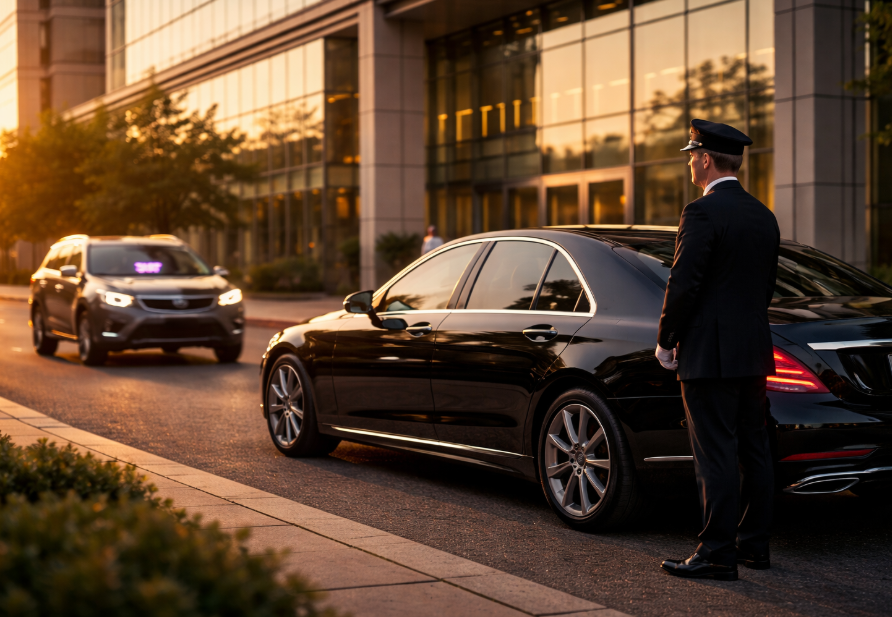
Timing Your Ride — Pre-Game Traffic vs Post-Event Exit Rush
Getting to United Center and getting away from United Center are two very different traffic problems, and treating them the same way is the most common mistake first-timers make.
Before the Event
Traffic builds steadily in the 90 minutes before puck drop or tip-off, with the heaviest congestion in the final 30–45 minutes before the event starts. Arriving with at least a 45–60 minute cushion before your desired arrival time gives your driver room to adjust routes if the Eisenhower is backed up or a street is barricaded for game-day security.
For concerts, timing shifts depending on the artist — arena concerts with an opening act often see a lighter, more spread-out arrival window than a Bulls or Blackhawks game where most fans arrive within the same tight pre-game window.
After the Event
This is where the real difference shows up. When a game or concert lets out, thousands of people hit the surrounding streets within minutes of each other, and standard rideshare pickup zones become a slow-moving scrum. A private car service handles this in one of two ways:
- Wait-and-return service, where your driver is parked nearby (not searching for you in a live queue) and can reach your exact pickup point within a few minutes of the final horn or last song.
- Staggered pickup timing, useful for groups who want to grab a quick bite or let the worst of the initial crowd clear before heading to the car.
Either way, the exit rush typically eases significantly 25–35 minutes after the event ends, so if flexibility is on your side, a short delay before pickup can mean a noticeably smoother ride out of the area.
Group Options for Bulls, Blackhawks & Concert Crews
United Center nights are rarely a solo outing — they’re bachelor parties, birthday groups, corporate suites, and big friend-group nights out. Vehicle choice should match both your group size and how the night is likely to end.
Sedans (up to 3 passengers): Best for couples or small groups who want a straightforward, no-fuss ride without the cost of a larger vehicle.
SUVs (up to 6 passengers): The most popular option for friend groups heading to a Bulls or Blackhawks game — enough room for the group plus jerseys, bags, and gear, without the premium of a full stretch or party bus.
Stretch limos and Sprinter vans (8–14 passengers): A strong fit for birthday parties, bachelor/bachelorette groups, or corporate outings where the ride itself is part of the night — pre-game drinks on board, music, and a single coordinated pickup instead of splitting across multiple rideshares.
Party buses (15+ passengers): Common for larger group nights, especially concerts, where a bigger crew wants to stay together the entire night rather than arrive in separate vehicles.
For groups, booking one coordinated vehicle also solves a problem rideshare apps create on busy nights: surge pricing multiplying across multiple separate cars, plus the risk of the group getting split up and arriving at different times. One vehicle, one driver, one pickup point keeps everyone together for both the arrival and the far more chaotic exit.
Related Guides: Chicago Bachelorette Party Transportation Guide
Frequently Asked Questions
1. How much does a limo to United Center cost?
Pricing generally runs $120–$250 one-way from downtown Chicago and $180–$400 one-way from the suburbs, with variation based on vehicle type, distance, and whether the booking falls on a high-demand event night. Round-trip and hourly packages often work out better in total value for game nights.
2. Is it better to book round-trip or one-way?
For most event nights, round-trip or hourly “wait-and-return” service is the stronger choice. It guarantees your ride is close by the moment the event ends, rather than requesting a new pickup into a flooded post-event queue.
3. Where exactly will my driver drop me off?
Drop-off location depends on which gates are open for that specific game or concert. Experienced local drivers adjust based on real-time barricades and traffic control rather than a fixed address, aiming for the shortest safe walk to your entrance.
4. How early should I book for a Bulls or Blackhawks game?
Booking 24–48 hours ahead is usually enough for a standard sedan or SUV. For high-demand games, playoff nights, or large group vehicles like stretch limos and party buses, booking several days to a week in advance is safer, since inventory for bigger vehicles moves quickly.
5. Can a limo handle a large group for a concert night?
Yes — Sprinter vans, stretch limos, and party buses are all commonly used for concert crews. For groups larger than a standard SUV can hold, it’s worth booking early since larger vehicles are in higher demand on marquee concert dates.
Related Guides: Escalade vs S-Class vs Sprinter Chicago Limo Guide
Ready to Skip the Parking Chaos?
United Center nights should be about the game or the show — not a stressful search for parking or a long wait in post-event traffic. A private limo or SUV gets your group there on time and gets you out faster once it’s over.
- Planning a night out for a big game or concert? Check our Events Limo Service page for full event-day packages.
- Bringing a bigger crew? See our Group Transportation options for SUVs, Sprinter vans, and party buses.
- Heading across town for a game instead? Read our Wrigley Field guide for the North Side version of this same playbook.
Book your ride today and make the trip to United Center as smooth as the seats you booked.
Explore More